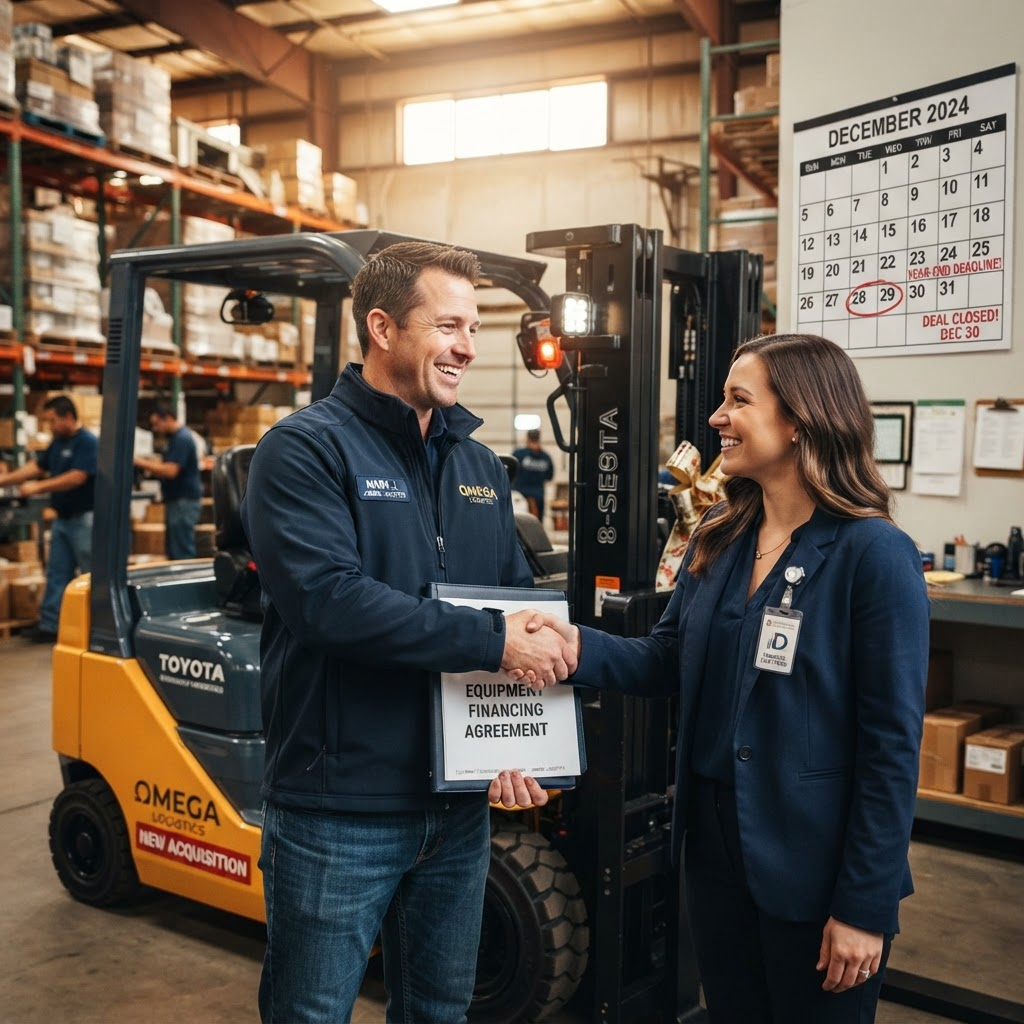
Understanding Equipment Finance Structures
When Mesa, Phoenix, and Tucson businesses need equipment, one of the most important decisions is not just which equipment to buy but how to structure the financing. The three primary options are Equipment Finance Agreements (EFAs), capital leases, and operating leases. Each structure has distinct advantages, tax implications, and ownership outcomes that affect your business differently.
Choosing the wrong structure can cost your Arizona business thousands in unnecessary taxes, limit your flexibility, or saddle you with equipment you no longer need. This guide breaks down each option so you can make an informed decision.
Equipment Finance Agreements (EFAs)
How EFAs Work
An Equipment Finance Agreement is essentially an equipment loan. You own the equipment from day one, and the lender holds a security interest (lien) until the agreement is paid in full. When you make your final payment, the lien is released and you own the equipment free and clear.
EFAs are the most straightforward equipment financing structure. There is no residual value, no buyout, and no end-of-term decision to make. You simply pay for the equipment over time and own it outright when finished.
Advantages of EFAs
Ownership from day one: The equipment appears on your balance sheet as an asset immediately. This builds your net worth and strengthens your financial position for future borrowing.
Full tax benefits: As the owner, you can claim Section 179 deductions, bonus depreciation, and standard MACRS depreciation on the equipment. For Arizona businesses making major equipment purchases, this can result in significant tax savings in the first year.
No end-of-term surprises: When the agreement ends, you own the equipment. There is no residual payment, no fair market value negotiation, and no return logistics to manage.
When EFAs Make Sense
EFAs are ideal for Arizona businesses purchasing equipment they plan to use for its full useful life, equipment that holds value well, and situations where tax deductions from ownership are valuable. Construction companies in Mesa buying excavators, manufacturing firms in Phoenix buying CNC machines, and medical practices in Tucson buying imaging equipment all commonly use EFAs.
Capital Leases (Finance Leases)
How Capital Leases Work
A capital lease is structured as a lease but functions more like a loan. The lender technically owns the equipment during the lease term, but the lease includes a bargain purchase option, typically $1 at the end of the term, that makes ownership transfer virtually certain.
Because the lessee is expected to take ownership, accounting rules require the equipment to be recorded as an asset on the lessee's balance sheet, similar to an EFA.
Advantages of Capital Leases
Similar tax benefits to ownership: Capital leases generally qualify for the same depreciation deductions as purchased equipment, including Section 179 and bonus depreciation.
$1 buyout simplicity: The bargain purchase option makes ownership transfer automatic and inexpensive at the end of the term.
Potentially easier approval: Some lenders have more flexible qualification criteria for leases than for loans, which can benefit Arizona startups or businesses with less-established credit.
Operating Leases (True Leases)
How Operating Leases Work
An operating lease is a true rental arrangement. The lender owns the equipment throughout the lease term, and at the end of the term, you return the equipment, extend the lease, or purchase it at fair market value. The equipment does not appear on your balance sheet as an asset.
Advantages of Operating Leases
Lower monthly payments: Because the lease payments only cover the equipment's depreciation during the lease term (not the full purchase price), monthly payments are typically 20 to 40 percent lower than EFA or capital lease payments for the same equipment.
Off-balance-sheet treatment: The equipment does not appear as debt on your balance sheet, which can improve financial ratios and preserve borrowing capacity for other needs.
Technology flexibility: If your industry experiences rapid technology changes, operating leases allow you to return equipment at the end of the term and upgrade to newer models without the burden of selling or disposing of outdated equipment.
When Operating Leases Make Sense
Operating leases work well for technology equipment that becomes obsolete quickly, equipment needed for a specific project or contract duration, and businesses that want to minimize balance sheet debt. Phoenix IT companies, Mesa engineering firms with project-based equipment needs, and Tucson businesses in rapidly evolving industries often favor operating leases.
Side-by-Side Comparison
Ownership: EFA gives you ownership from day one. Capital lease gives ownership at end of term via $1 buyout. Operating lease means the lender owns the equipment throughout.
Monthly payments: EFA and capital lease payments are similar and cover the full equipment cost. Operating lease payments are lower because they only cover depreciation during the lease term.
Tax deductions: EFA and capital lease allow depreciation deductions including Section 179 and bonus depreciation. Operating lease payments are deductible as operating expenses.
Balance sheet: EFA and capital lease appear as assets and liabilities. Operating lease stays off the balance sheet in most cases.
End of term: EFA means you own it free and clear. Capital lease has a $1 buyout. Operating lease requires return, extension, or fair market value purchase.
How to Choose the Right Structure
The right financing structure depends on your business goals, tax situation, and how long you plan to use the equipment. For Mesa, Phoenix, and Tucson businesses buying equipment for long-term use, EFAs and capital leases typically provide the best total value. For businesses needing flexibility or lower payments, operating leases offer advantages worth considering.
Equipment Finance Academy helps Arizona businesses evaluate all three structures and select the one that aligns with their financial goals. Apply for equipment financing or contact us to discuss which structure makes the most sense for your situation.
Sarah Mitchell
Equipment financing specialist with years of experience helping businesses acquire the equipment they need to grow and succeed.